Craig Newmark Graduate School of Journalism at CUNY

Spring 2027
Visual Electives

Everything playing on this page was made by Newmark students. Here's what you can make this spring.

Specialization · Advanced Reporting

TV News 1

Stephanie BertiniWednesdays, all day6 credits

Course description

This introductory course is open to all students who choose to take it as a 6-credit elective, even if they don't go on to take TV News 2 in the fall. The course will consist of an intense workload of how to report on camera as a video journalist, how to write on deadline several forms of anchor voice overs with and without sound bites for local television, digital and streaming news programs. Students will brush up on the video and editing skills they learned in the first semester fundamentals course with a goal of shooting and editing in the style of local television news.

Students will learn how to put together a local news reporter package in the latter part of the semester. They will partner with fellow students to pitch, shoot, write and edit a reporter package all in one day on deadline, providing students with ample material to create an on-camera demo reel. Students will learn how to read from a teleprompter in the broadcast studio. They will start to build confidence in front of the camera by learning how to anchor a newscast from the studio and how to write and execute a reporter standup in the field.

This course is for anyone interested in learning the highly marketable skills needed to work in television news, both in front of the camera as a reporter and anchor, and behind the camera as a videographer, editor and story producer. This course meets the advanced reporting requirements. Students interested in taking TV News 2 in the fall must take TV News 1 first.
Gibran Caroline Boyce, “Running With a Guide.” A blind runner and his guide train for the NYC Marathon. Aired on Spectrum NY1 News.

Specialization · Application required

Documentary

Seminar + LabWed 2:00–8:20 PM3 + 3 credits

Yoruba Richen, Stephanie Wang-Breal, Rebecca Blandon

Seminar description

This is the first part of the 2-semester Documentary Specialization, which emphasizes both the theory and practice of documentary storytelling. The purpose of this class is to introduce students to the fundamental concepts of narrative storytelling and documentary filmmaking and to stimulate idea development for a 15–20 mins documentary capstone. The emphasis this semester is on documentary styles, story structure, idea development, pitching and proposal writing.

Students will analyze a number of documentaries and explore many issues related to them – including ethics and relationship between filmmaker and subject. They will write a paper comparing two films in terms of structure, style and content, and they will also write a case study of a film and interview that filmmaker. Students will develop and pitch a documentary story idea, that they will workshop with industry professionals. They will also produce a character sketch as well as a short sample reel/ proof of concept for their film. In the summer, students will work with coaches and continue to develop and shoot their film, completing it in the fall documentary class.

Lab description

The documentary form continues to expand, creating new and exciting opportunities for journalists. This specialization track focuses on in-depth project-based documentary journalism, whether it be documentary features, series, video for the web or interactive documentaries.

The six-credit-hour documentary seminar (the Lab section is 3 hours) will combine the rigor of journalistic research and reporting with an intense focus on building advanced documentary camera skills, story development and editing for structure. Students will learn about different styles and genres of documentary films by watching, writing about, and analyzing documentaries while they are developing their own documentary ideas. They will write proposals for their film projects then pitch them in front of industry professionals.

Students produce at least two major videos which will move them forward in their story development towards their capstone project. The editing portion will focus on story structure and developing technical editing skills. All the lessons will be a combination of theory and hands-on instruction.

Ana Teresa Colón García, “Noel (I Carry You With Me).” Packing up her late grandfather's home, she and her father uncover an archive of political struggle and FBI surveillance in Puerto Rico. Screening at the Teaneck International Film Festival, November 2026.

Advanced Reporting

Video Features

Anuz ThapaTue 5:30–8:20 PM3 credits

Course description

This course is your opportunity to perfect the video production techniques you learned in the first semester. You will improve your shooting, writing and editing skills so that you can produce professional level video features for any platform, from digital sites like Vox and Vice to streaming news channels like CNN and CBS, to the websites of newspapers and magazines, like The Washington Post and The New Yorker.

In this class, you will learn to shoot with the C-100, a professional video camera widely used in the industry. You'll capture good clear audio and learn simple lighting techniques to enhance your shots. Using thoughtful storytelling approaches, you will produce 2 – 3 stories of your choice, either reporter-driven (i.e. narrated) or non-narrated (told by the subject.)

Video is everywhere. Well-told video features will make your resumé stand-out.

Stephanie Hong. A character with a passion job, told without narration.

New tools · FAA license

Drone Journalism

Travis FoxFri 10:00 AM–12:50 PM, weeks 9–152 credits

Course description

The advent of drone technology gives journalists and filmmakers a powerful new tool — a camera that flies! We will teach you how to fly a drone to achieve the best aerial shots and other uses within the field of journalism. But most importantly, this module will cover how this new tool comes with a slew of legal and ethical questions.

You must be licensed by the federal government to operate as a drone journalist. The biggest part of this course will be preparation for the FAA's remote pilot exam. It will also introduce you to a variety of local laws and ethical guidelines that are crucial to how you fly as a drone journalist.

Student flight footage: Nazeefa Ahmed & Baron Carr

New tools · Open source

Digital Forensics for Visual Investigations

Stella CooperWed 5:30–8:20 PM2 credits

Course description

The rise of social media has brought with it an enormous amount of user-generated multimedia content that reporters often use as evidence in news stories and videos. It is crucial for journalism students navigating the digital age to be equipped with the skills necessary to discover and verify photos and videos on social media and convincingly present visual evidence to an audience to effectively neutralize misinformation.

And in the last few years, AI-generated photos and videos have flooded the internet with increasingly realistic, yet entirely fake images designed to deceive audiences at a massive scale.

This 10-week course in visual investigations teaches students to build open-source investigations from the ground up using an array of forensic techniques and digital research tools. By the end of the course, students will have learned the basics of the technical skillset required to pitch, design, and execute their own visual investigations and more effectively neutralize misinformation.

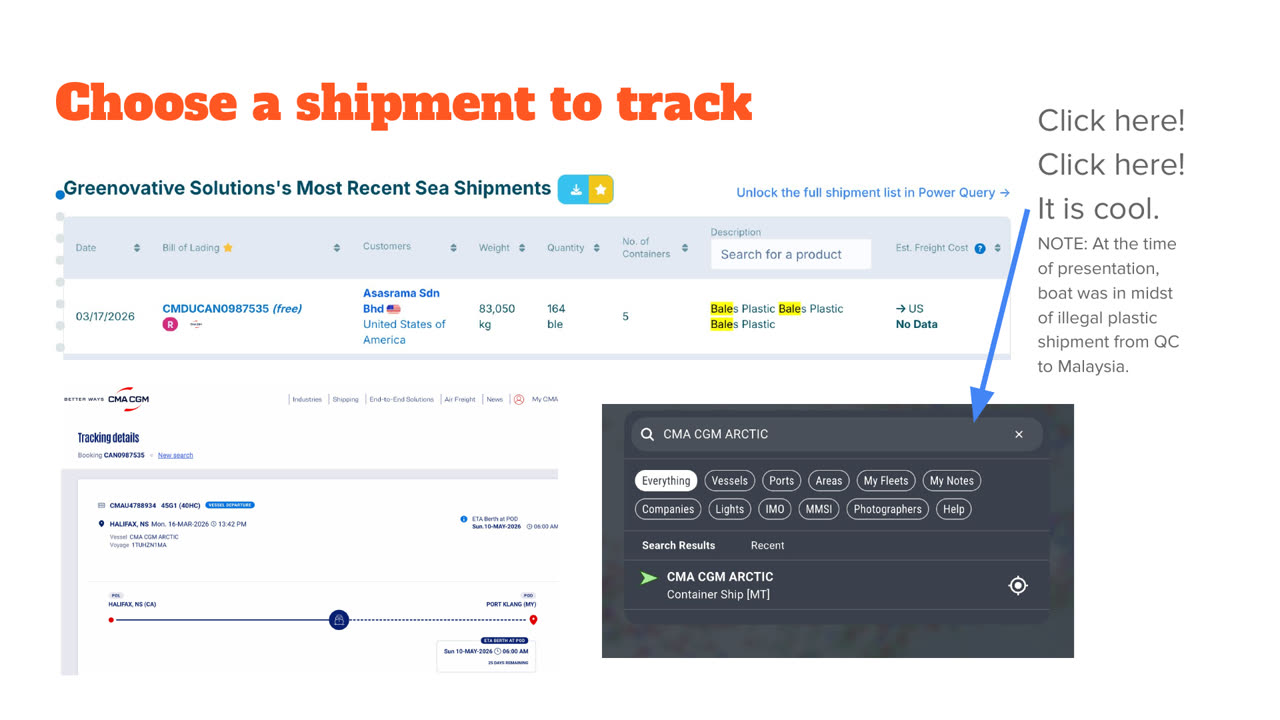
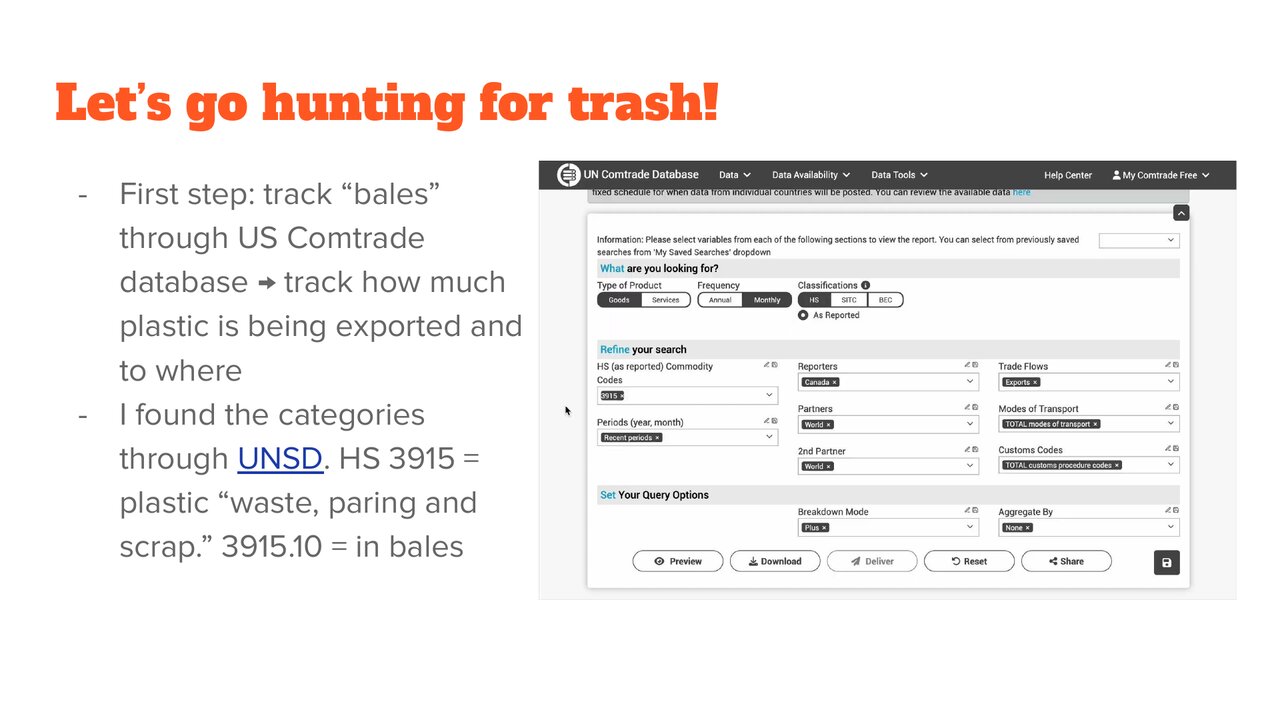
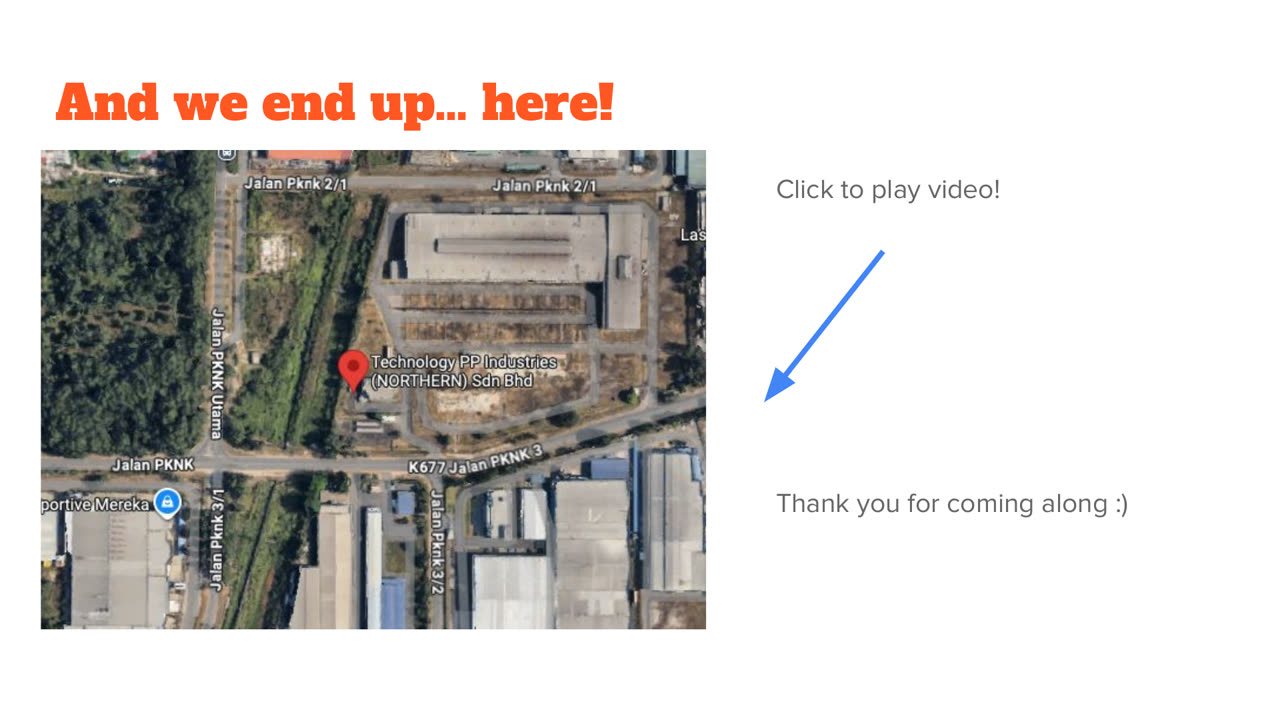
Student slide: tracking Canadian plastic waste exports in the UN Comtrade database Slide showing satellite imagery of the recycling plant in Malaysia where the shipment ended up Slide tracking plastic waste shipments with trade data

Laura Pellicer, “Where is Quebec's plastic recycling ending up?” Using trade data, ship tracking and satellite imagery, she followed plastic from her hometown to a recycling plant in Malaysia. See Laura's full investigation →

Photo

Photo­journalism

Jim EstrinMon 9:30 AM–12:20 PM3 credits

Course description

This is an introductory course in photojournalism and builds on material introduced in Craft and other courses during the first semester. It is structured as a hands-on workshop. Instruction will progress from basic camera operation and the news “one shot” to more comprehensive, long-form visual storytelling. Using the journalism school's Canon dSLRs (those who have equivalent cameras of their own are encouraged to use them), students will learn how to shoot portraits, cover news events and produce photo essays.

The course will also teach post-production skills (Adobe Photoshop) and address how to present photos to editors and news outlets. Intro photo is structured as a stand-alone course as well as a precursor to the advanced photo course.

Feature photos by Celina Jimenez and Alex O'Connell.

Video & social

Social Video

John SmockWed 10:00 AM–12:50 PM2 credits

Course description

Video accounts for more than 50% of mobile traffic and will increasingly dominate the social media channels you frequent: Facebook, Twitter, Instagram, Snapchat, YouTube and Tik Tok. Each of these channels speaks with a different grammar. Now's the time to develop fluency in these new visual languages.

In this hands-on class, we'll look at the tools, techniques and visual language unique to each platform and create work in each session. Classes will use smartphone kits as a primary visual reporting and editing tool to produce explainers, animations, streaming coverage, text on video. We will also work with archival and found footage. In addition to individual projects produced to complement work in other courses and capstone projects, students will produce a group project with a partner media organization.

Angelina Ispir on New York's proposed pied-à-terre tax, and Irene Milanez on what “no tax on tips” really means.

Questions?

Advising appointments start October 19, and spring registration opens November 18. Talk to us before then.

Travis FoxDirector of Visual Journalism · all visual electives Vanessa BotelhoDirector, TV News & Digital Specialization Yoruba RichenDocumentary program John SmockDirector of Photojournalism · Photo and Social Video

Most syllabus links open in the school's Google Drive. Sign in with your journalism.cuny.edu account to view them, or browse the full course syllabi archive.